

Additional information
| Artist | Foujita |
|---|---|
| Nationality | Japanese, French |
| Category | Asian |
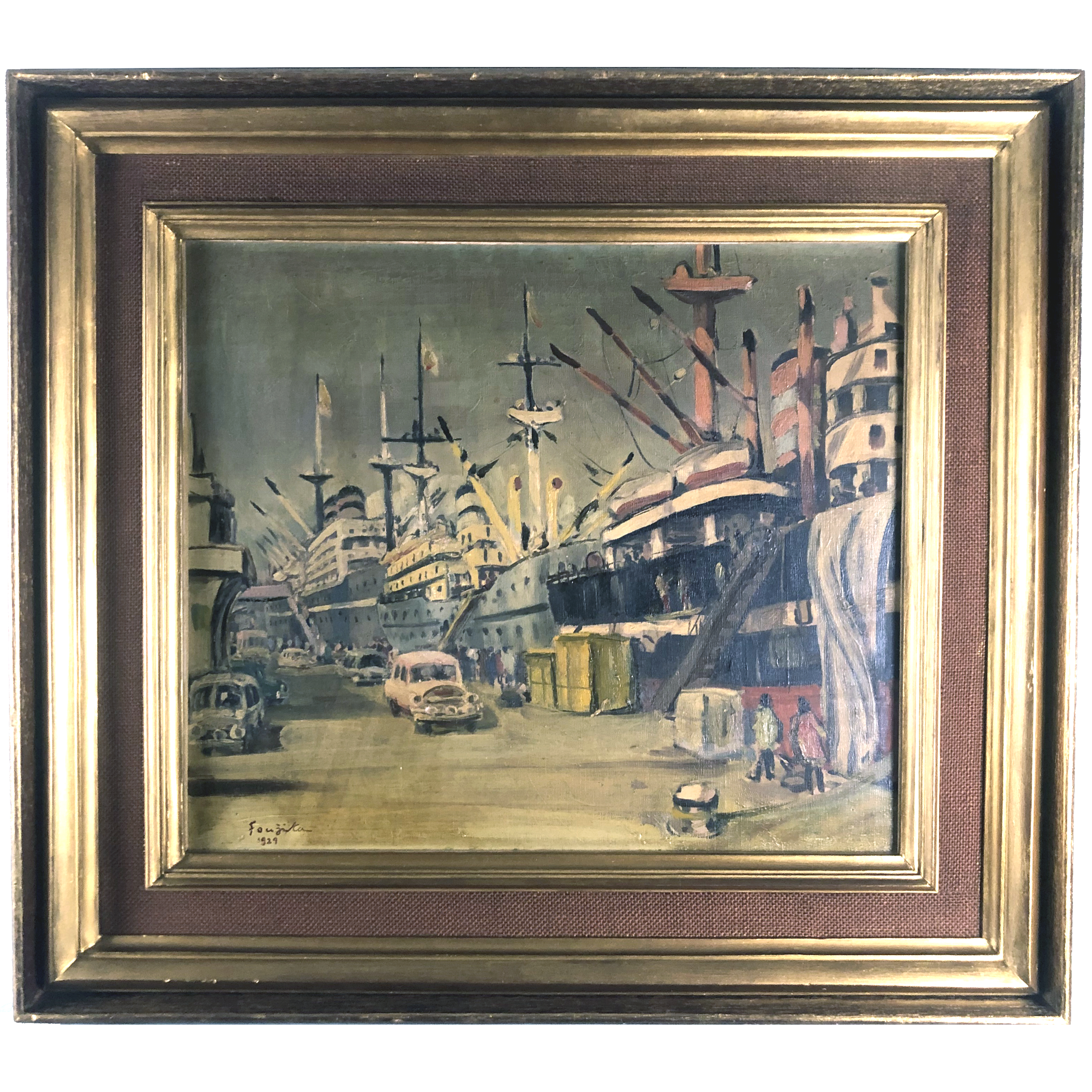
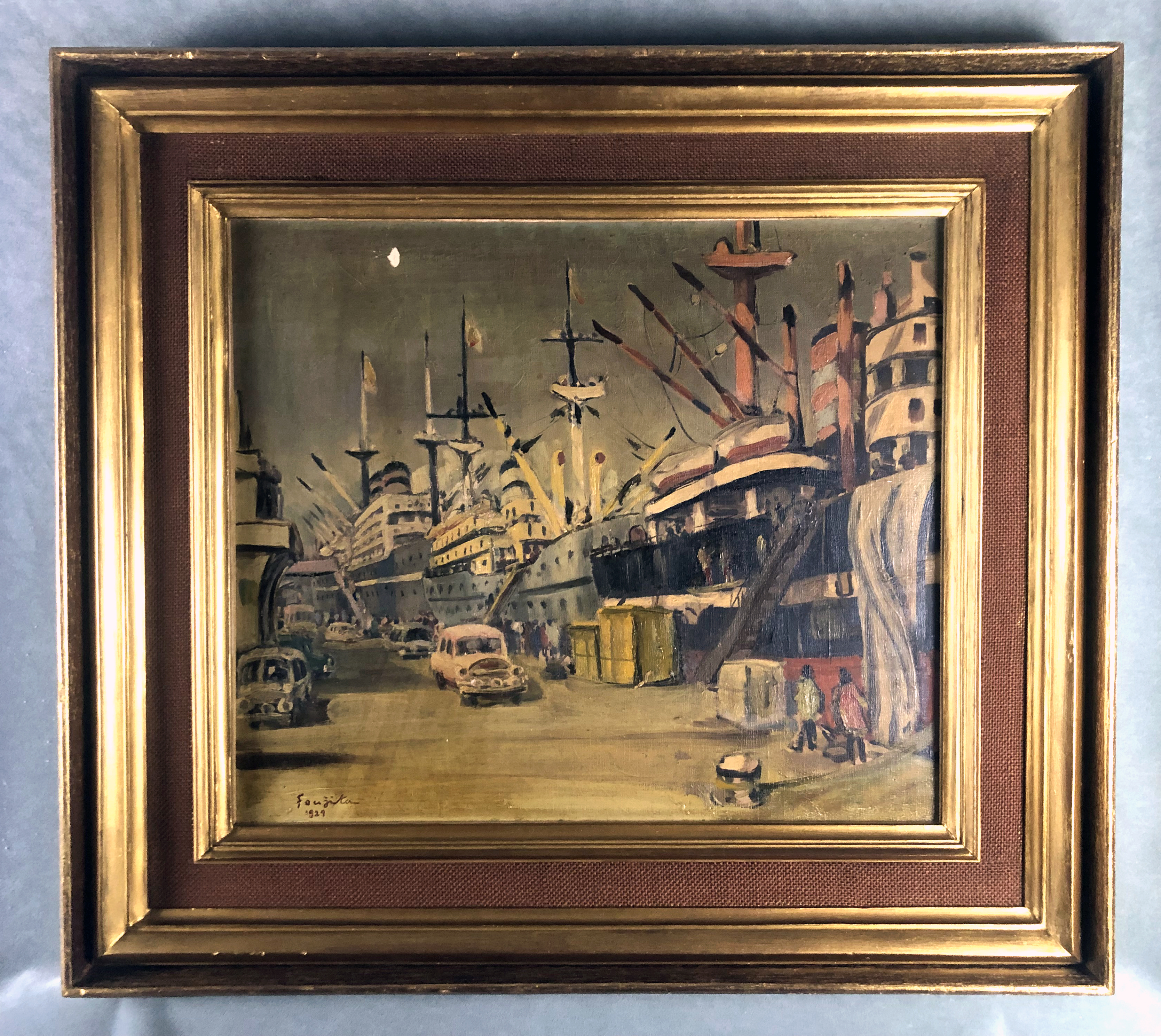
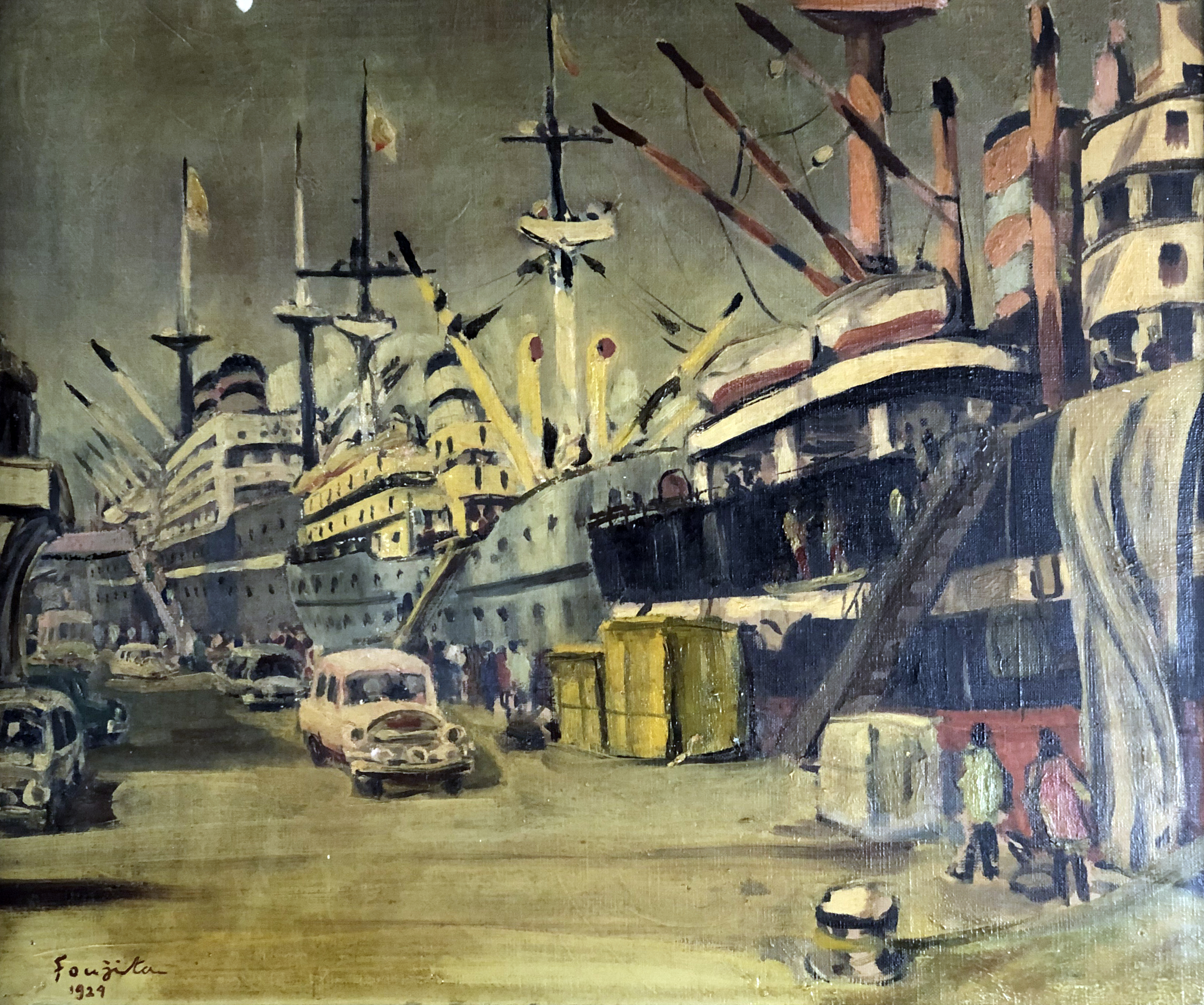

ArtistJoujita, Tsuguharu "Leonard"
Artist Years1886-1968
Artist NationalityJapanese, French
Year1929
MediumPainting > Oil
DimensionsCanvas: 18 X 21 inches
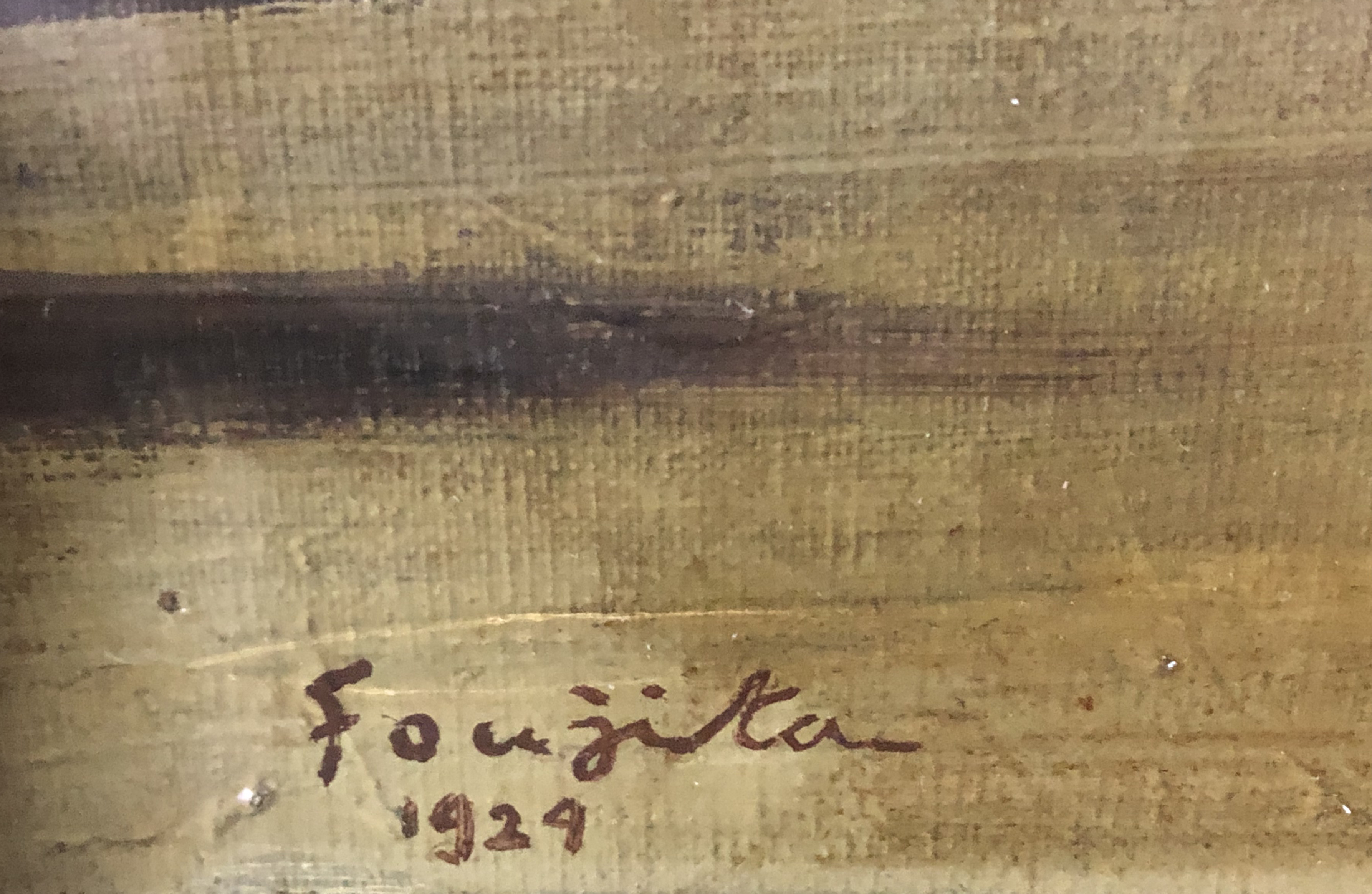
Oil on canvas, signed “Foujita / 1929” lower left.
Accession NumberRC1897
NotesFoujita was born in 1886 in Ushigome, a former ward of Tokyo that is now part of the Shinjuku Ward. He was the son of Fujita Tsuguakira Fujita, an Army Medical Director. Two years after his birth, the family moved to Kumamoto, on the island of Kyushu. Following the premature death of his mother and his father's subsequent remarriage, the family moved back to Tokyo in 1892.
Foujita developed an interest in painting in primary school and as an adolescent decided to become a painter. When he was fourteen, one of Foujita's watercolors was exhibited at the Exposition Universelle in Paris as one of the representative artworks by Japanese middle schoolers.
Foujita began studying French as a high schooler and hoped to study in France after finishing school. However, his father, after consulting with his friend Ōgai Mori, a surgeon and novelist who had previously lived in Germany, encouraged him to continue his studies in fine art in Japan. He enrolled in 1905 at what is now the Tokyo National University of Fine Arts and Music and studied under Seiki Kuroda, who taught yōga, western-style painting. He also took courses on nihonga, Japanese-style painting, led by Seihō Takeuchi and Gyokushō Kawabata.
Foujita met his first wife, Tomiko Tokita, a school teacher, during a voyage to Chiba Prefecture during which he realized a number of paintings for his diploma, including the artist's first-known first self-portrait. The two married in 1911.
Foujita graduated in 1910. He exhibited in 1910 as part of the Salon Hakuba-Kai (White Horse Association), organized by Seiki Kuroda, which sought to popularize yōga with the Japanese public, and later at the first two exhibitions organized by Tokyo Kangyo, a structure that promoted art and industry. However, his paintings were refused for three consecutive years at the salon Bunten, an annual exhibition organized by the Ministry of Education. Foujita's paintings at this time—before he moved to France—were often signed "Fujita", rather than the francized "Foujita" which he later adopted.
Unsure of his personal style and never having lost sight of his dream to travel to Paris, Foujita decided to leave in 1913, when he was 27 years old. It was decided that he would receive an annuity from his father for three years, so that the artist would return to his home and his wife in Japan at the age of 30.
Foujita moved to Paris in 1913, at a time when foreign artists flourished, hoping to develop their artistic sensibilities and gain recognition in the European art capital. He settled in Montparnasse, and quickly became part of the eclectic art scene there that, lacking a clear style or discipline, later became known as the École de Paris (School of Paris). He moved into the artists' residences at Bateau-Lavoir. He quickly made friends with the Japanese painter Riichirō Kawashima, who had many connections in the Paris art scene, as they shared a studio. Foujita also developed a friendship with photographer Shinzo Fukuhara, who piqued Foujita's interest in photography.
While many Japanese artists who came to Paris tended to live amongst themselves and struggled to adjust to the Parisian lifestyle, Foujita made great efforts to adapt to his new surroundings. He began signing his paintings with the French-looking spelling of his name, Foujita, rather than Fujita, and improved his French language skills. He also distinguished himself from many of his Japanese confrères, who sought to affirm their mastery of oil paint, as Foujita worked primarily in watercolor.
His network soon included artists of many nationalities. After moving his studio to the Cité Falguière, he met painters Amedeo Modigliani and Chaim Soutine, he took dance classes with Raymond Duncan, and he visited the studios of Pablo Picasso and Diego Rivera.[12] This fruitful encounter, during which Foujita discovered cubism, led to his acquaintance with Guillaume Apollinaire, Georges Braques, Fernand Léger, Erik Satie, Kees van Dongen, Jean Metzinger, André Derain and Pierre Bonnard. His visit to Picasso's studio introduced him to the "naïve" style of Henri Rousseau, as Picasso owned one of Rousseau's works and had it hanging on his wall.
1914 marked the outbreak of World War I and the beginning of a complicated period for Foujita. Many foreign artists left Paris to fight in the war. Most Japanese artists also chose to return home. However, after having purchased a plot of land on the outskirts of Paris where they built a modest home, Foujita and Kawashima decided to stay. In the coming months, the two artists would work as volunteers, alongside sculptor Ossip Zadkine, for the Red Cross. In September, they returned to their home to find it destroyed. Additionally, Foujita had a financially difficult time because his father was no longer able to send him his annuity due to the war.
Following the departure of Kawashima for Tokyo in 1915, Foujita moved to London in January 1916. During this period, Foujita ended his relationship with his wife Tomiko. He also informed his father that he no longer needed financial support and would be staying indefinitely in Europe. Foujita returned to Paris in early 1917. In March, he met Fernande Barrey, who had been a model for Modigliani, in the Café de la Rotonde. Thirteen days later, Foujita and Fernande were married.
Fernande was instrumental in the artist's first professional success in Paris. A few weeks after marrying Foujita, she showed the art dealer Georges Chéron some of Foujita's drawings. Chéron went to Foujita's studio and bought all the works he was shown. She also secured an arrangement between Foujita and the Galerie Chéron, where he had his first solo exhibitions.[19] His first solo show, in which he presented 110 of his water colors, was a great success. The artist began exhibiting more frequently in Paris and in 1920 became a member of the Salon d'Automne.
This success coincided with the arrival of the Roaring Twenties in Paris, a time of relative economic prosperity that fueled a strong art market and thriving nightlife. Foujita was a regular at popular clubs and events, immediately recognizable thanks to his signature bowl-cut and round glasses.
Foujita's production in the early 1920s began to concentrate into three distinct genres: self portraits, interior scenes (including many still lives), and nudes. There was great interest in Foujita's style, which was often perceived as marrying "Eastern" and "Western" elements in an original manner.
Japanese artists in Paris who practiced Western-style painting were generally described by contemporary critics as simple copyists, or, in the words of André Warnod, "wanting to be European at all costs". Yet, Foujita was deemed the exception to this rule. Warnod states that Foujita "knew how to look with his own eyes and paint according to his temperament, without worrying too much about others": compared to other Japanese painters, Foujita was seen as having "personality". Art historian Asato Ikeda has argued that "in contrast to other Japanese artists in the city, Fujita [targeted] his paintings to French audiences by successfully negotiating the artistic heritage of his country and making something original from the perspective of European art history".
Foujita's works in the late 1910s incorporated a blend of styles. From the beginning of his stay in Paris, Foujita took advantage of his proximity to the Louvre to study artists such as Raphael, Rembrandt, and Leonardo da Vinci. In 1917, Foujita began drawing figures in a highly stylized manner, often in profile, which appear to draw on both medieval primitive painting, as well as Amadeo Modigliani's simplified portraits. The artist, heavily inspired by Italian painting, also depicted Christian themes like the Virgin and Child and the Crucifixion of Christ. These themes would soon disappear from Foujita's oeuvre, but they later dominated his artistic production from 1951 onwards.
His works were appreciated as the harmonious meeting of Japanese and European aesthetics. One such painting, Reclining Nude with Toile de Jouy, for which French model Kiki de Montparnasse posed, was met with great success at the 1922 Salon d'Automne. This work referenced the classical genre of the nude, as well as more recent French examples like Edouard Manet's Olympia. He drew inspiration from ukiyo-e artists such as Suzuki Harunobu and Kitagawa Utamaro, who left their female figures' skin uncolored, though he painted the Black artists' model and performer Aïcha Goblet in a more Cubist style. Foujita wrote that the objective of his nudes was to "represent the quality of the most beautiful material there is: that of human skin".
Foujita received an important Parisian commission in the late 1920s that showcased his capacity to create in the Japanese artistic tradition. Painted at the Cercle de l'Union Interalliée, an exclusive social and dining club, it features two kachō-ga, or bird and flower painting panels created in a yamato-e style.
In 1922, Foujita met Lucie Badoul, who he called "Youki", the Japanese word for "snow", and she became one of his models. In 1924, he divorced Fernande, and in 1929, he married Youki. Around the time of his marriage to Youki, Foujita was having serious financial woes. He had been living a luxurious life of celebrity in Paris but he had not been paying taxes since 1925. Now, the tax authorities caught up with him and demanded full payment. Foujita left for Japan with Youki, hoping he might be able to recoup his losses by exhibiting there. Foujita's reception in Japan was mixed. The general public packed his first one-man show there, and his works sold well, but the critics panned him as a mediocre artist imitating Western style. Foujita returned to France via the United States, travelling to Hawai'i, San Francisco, and New York. While in New York, he learned about the Wall Street Crash. He once again briefly returned to New York to organize a one-man exhibition at the Paul Reinhardt Gallery, but the show was not successful
(source: wikipedia.org)
| Artist | Foujita |
|---|---|
| Nationality | Japanese, French |
| Category | Asian |