

Additional information
| Artist | Bonnaud |
|---|---|
| Nationality | French |
| Category | European |
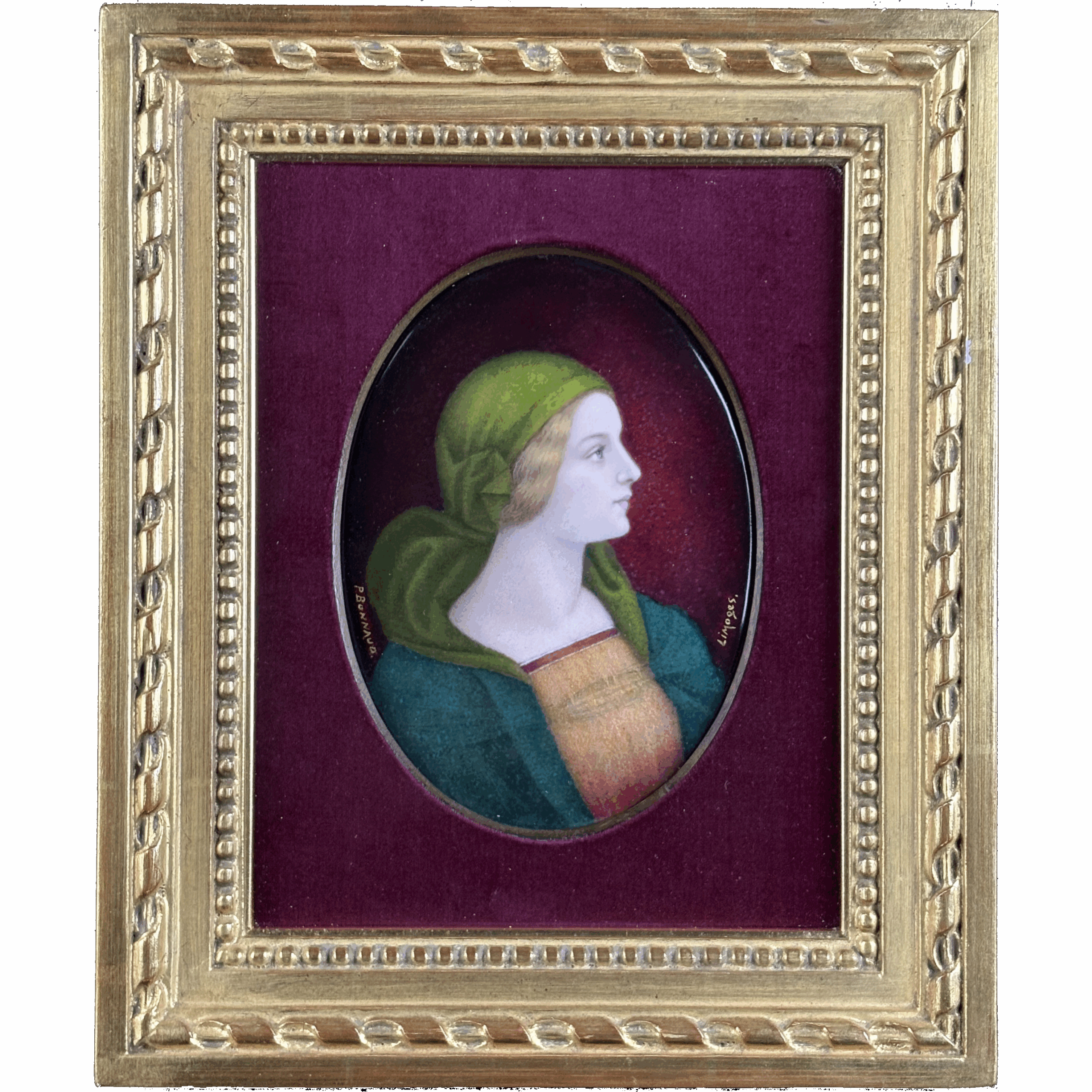
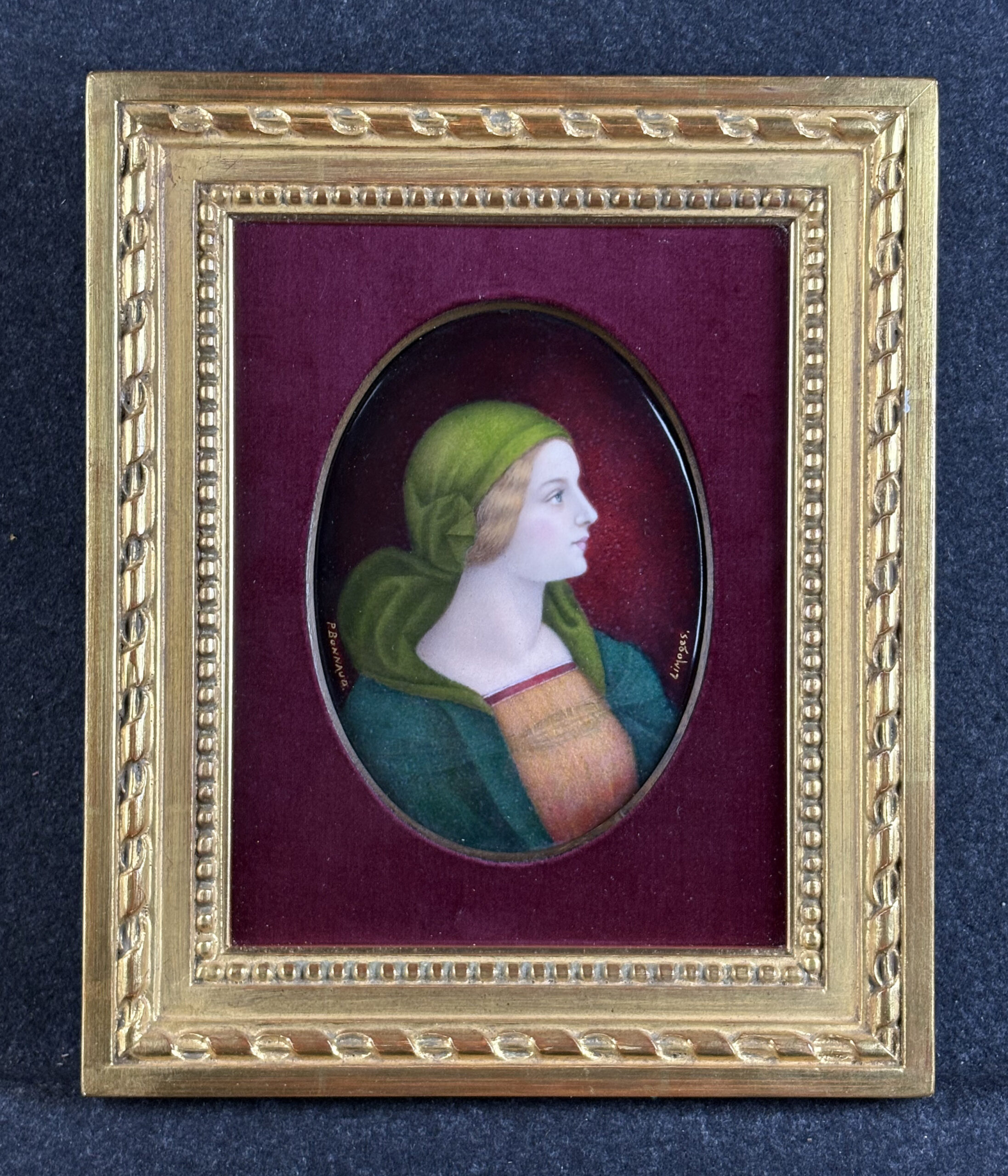

ArtistBonnaud, Pierre
Artist Years1865-1930
Artist NationalityFrench
Yearca. 1890
MediumCeramic > Enamel on Porcelain
Dimensions6.4 X 4.6 inches
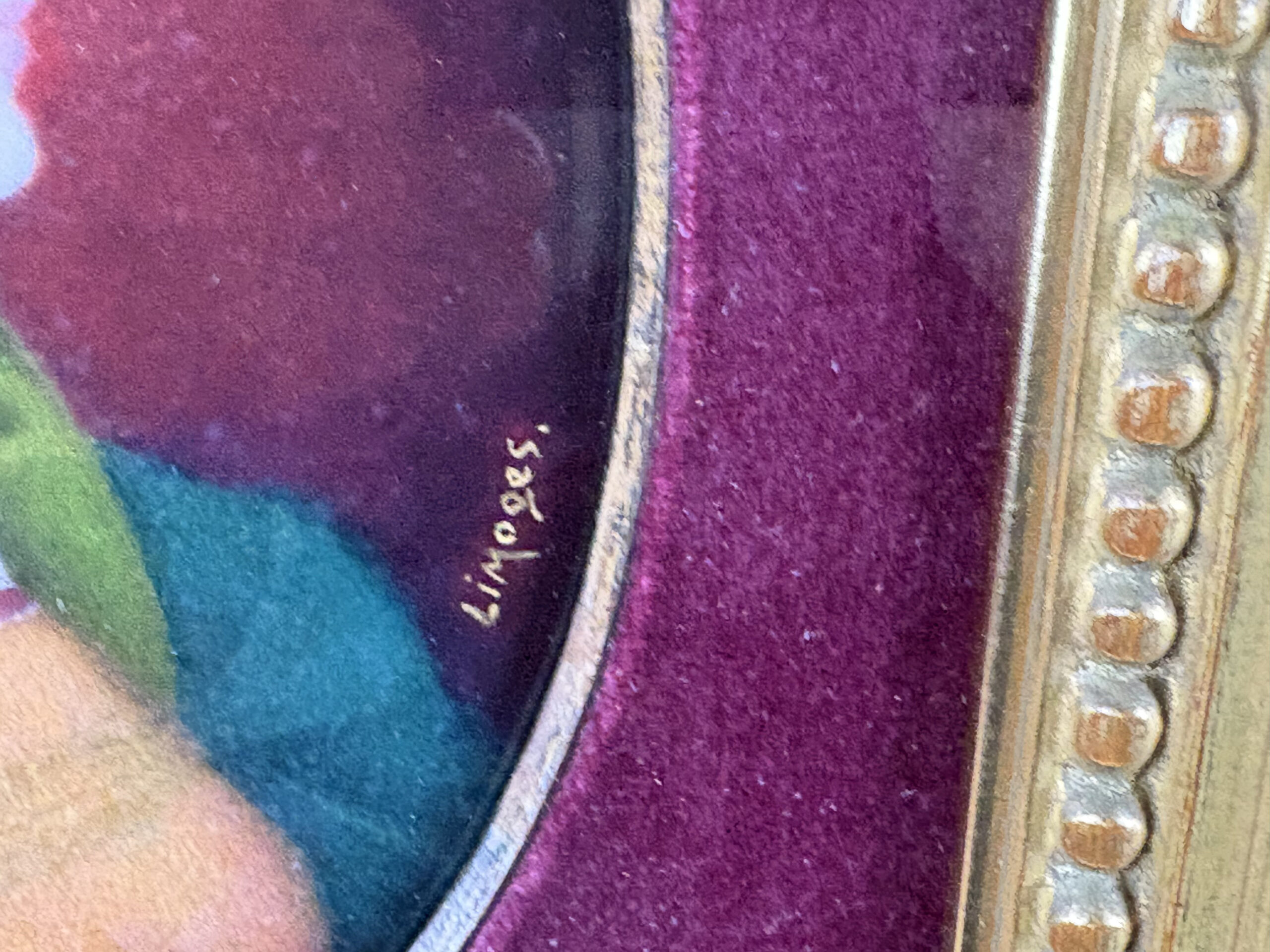
Convex porcelain plate with enameled portrait, signed ” P. Bonnaud” at left and “Limoges” at right, nested in a purple velvet background.
Accession NumberRC2023
Notes1. Pierre Bonnaud was a French painter. Born in Lyon, he was a student of the École des Beaux-Arts de Lyon then de Paris and then of Jean-Paul Laurens and Gustave Moreau, he was regularly awarded medal at the Salon des Artiens Français where he exhibited in 1890. He also worked for fashion newspapers and the Limoges porcelain factory.
2: Limoges enamel has been produced at Limoges, in south-western France, over several centuries up to the present. There are two periods when it was of European importance. From the 12th century to 1370 there was a large industry producing metal objects decorated in enamel using the champlevé technique, of which most of the survivals (estimated at around 7,500 pieces), and probably most of the original production, are religious objects such as reliquaries.
After a gap of a century, the industry revived in the late 15th century, now specializing in the technique of painted enamel, and within a few decades making rather more secular than religious pieces. In the French Renaissance it was the leading centre, with several dynastic workshops, who often signed or punchmarked their work. Luxury pieces such as plates, plaques and ewers were painted with sophisticated Mannerist decoration of pictorial figure scenes, which on vessels were surrounded by elaborate borders.
In both periods the largest pieces include narrative scenes. These exemplify the styles of their respective periods. In the medieval champlevé the action is simply and directly shown by a few figures, with patterned backgrounds. In the Mannerist painted pieces numerous figures and detailed backgrounds tend to overwhelm the activity of the main figures.
Eucharistic dove in champlevé, early 13th-century
After a decline from about 1630, and later competition from porcelain, high-quality production revived in the mid-19th century, and adopted Art Nouveau and other contemporary styles, with a relatively small production.
(source: wikipedia.org)
| Artist | Bonnaud |
|---|---|
| Nationality | French |
| Category | European |