

Additional information
| Artist | Zeller |
|---|---|
| Nationality | German |
| Category | German Expressionist, European |
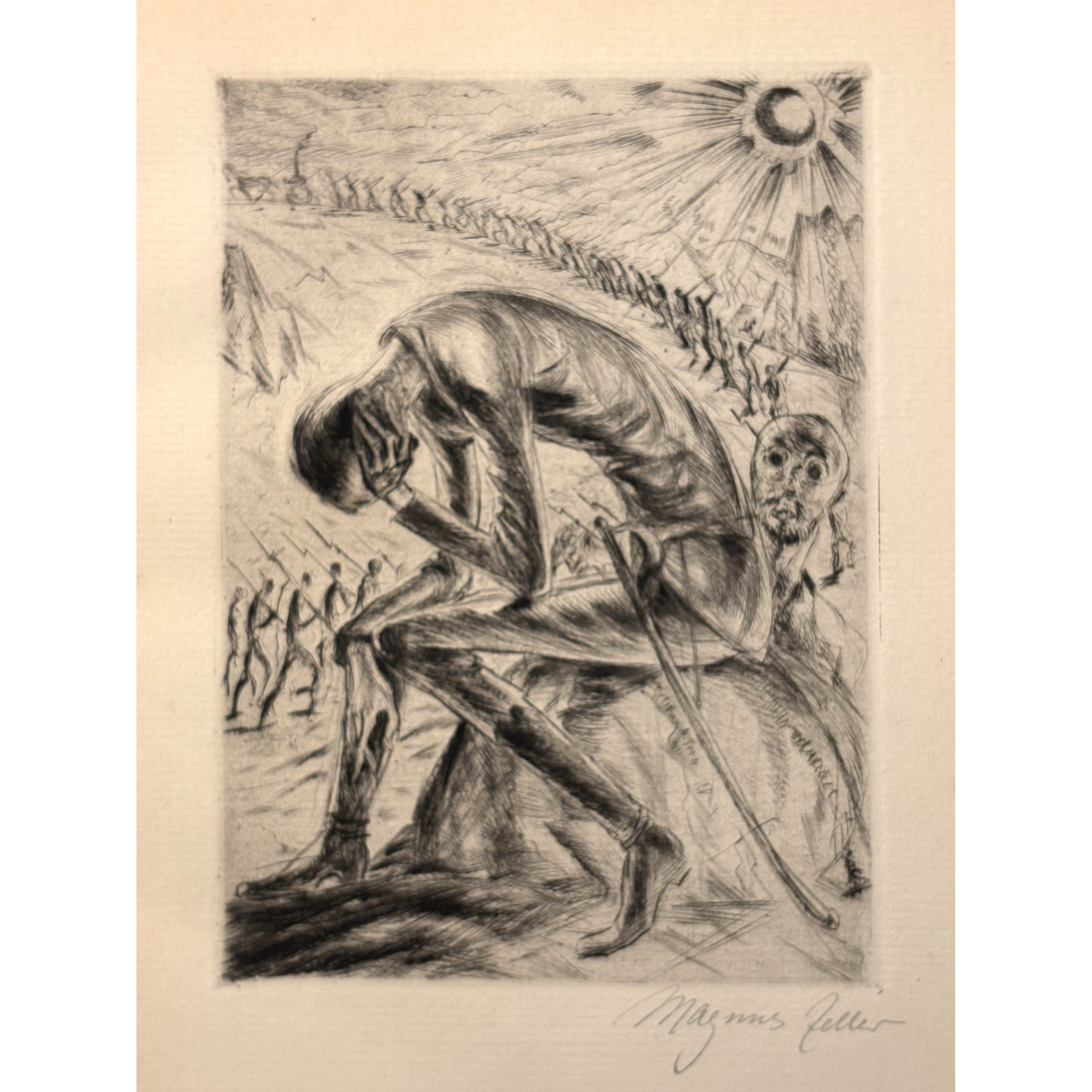
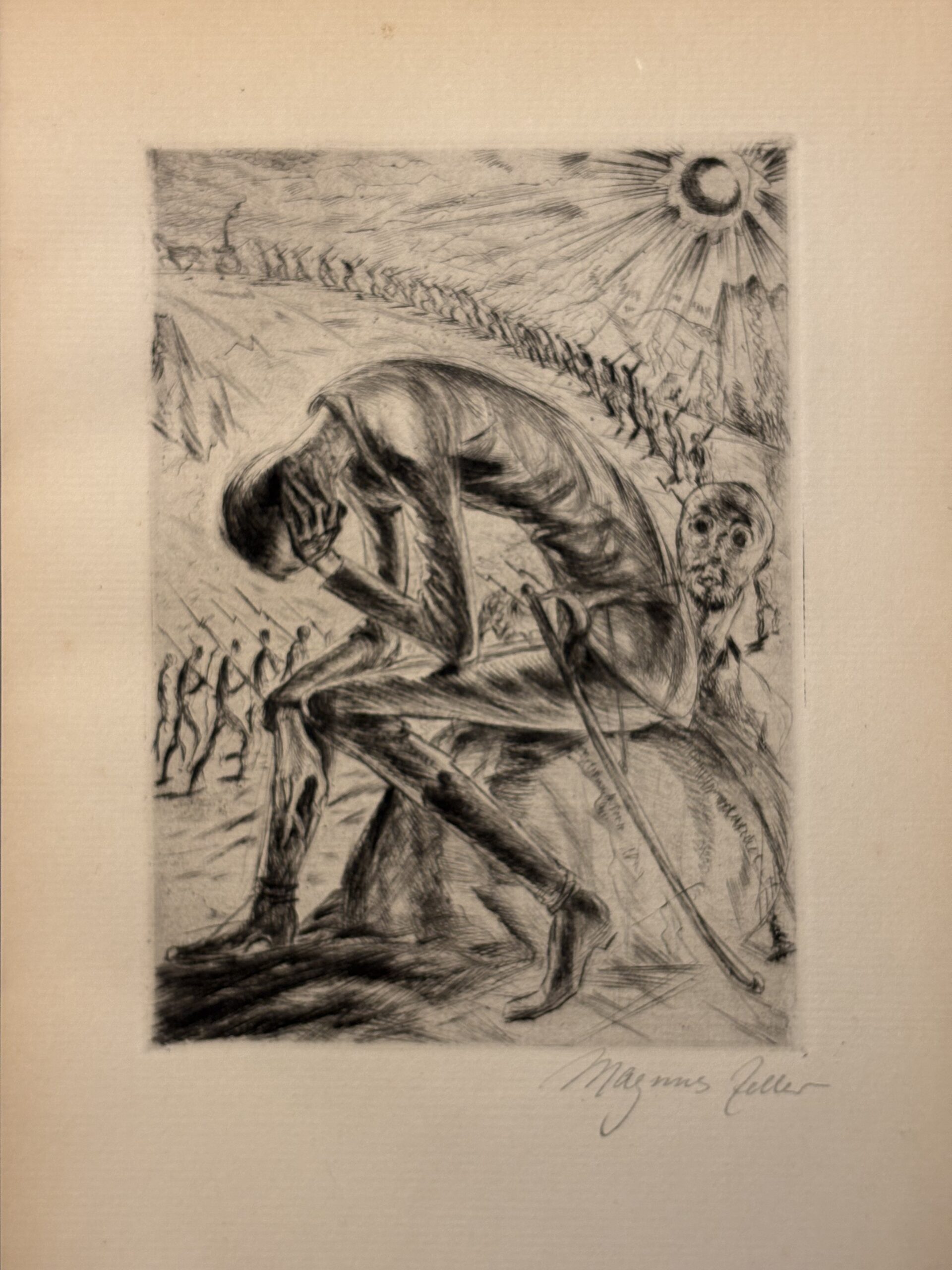

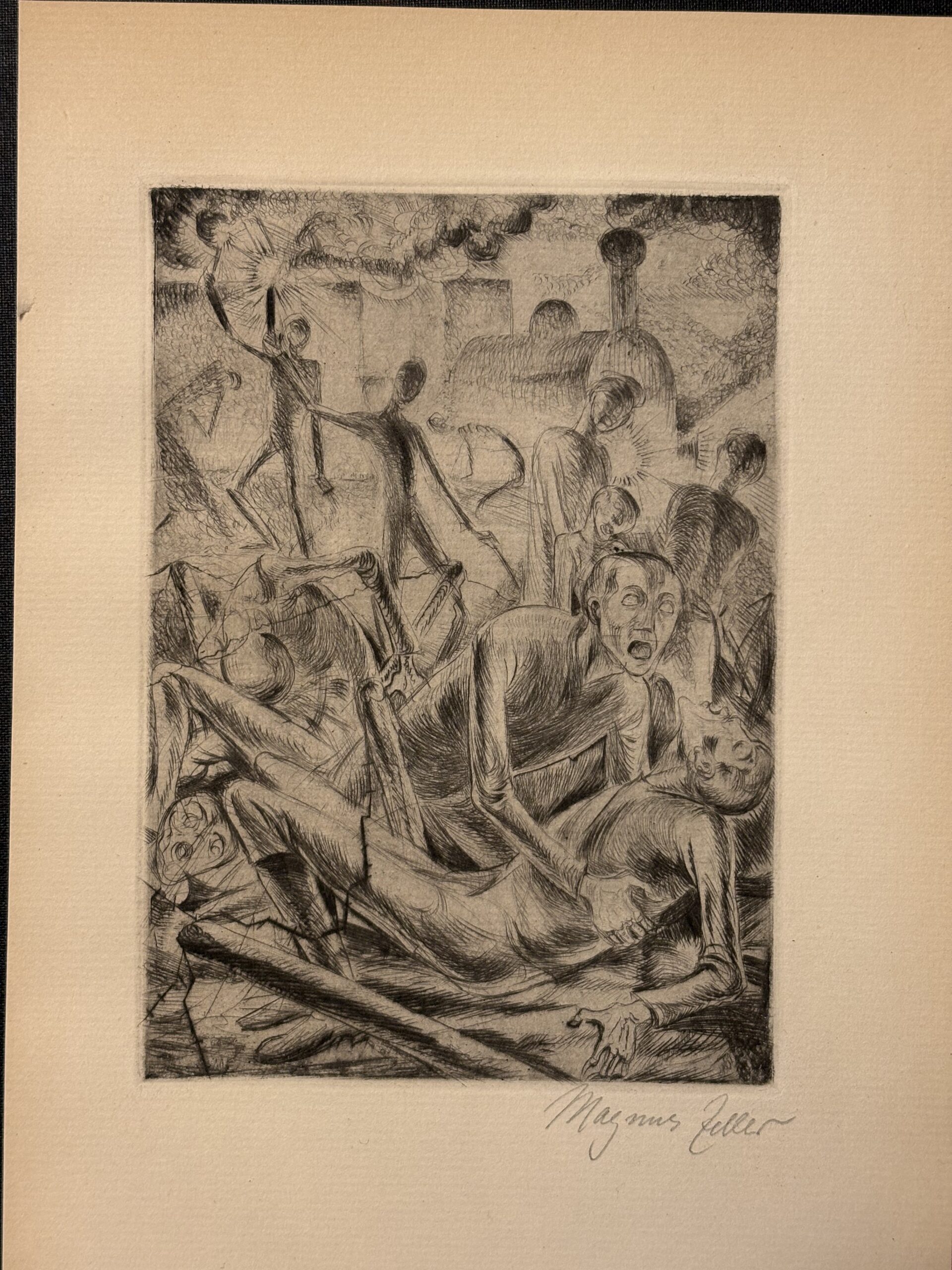
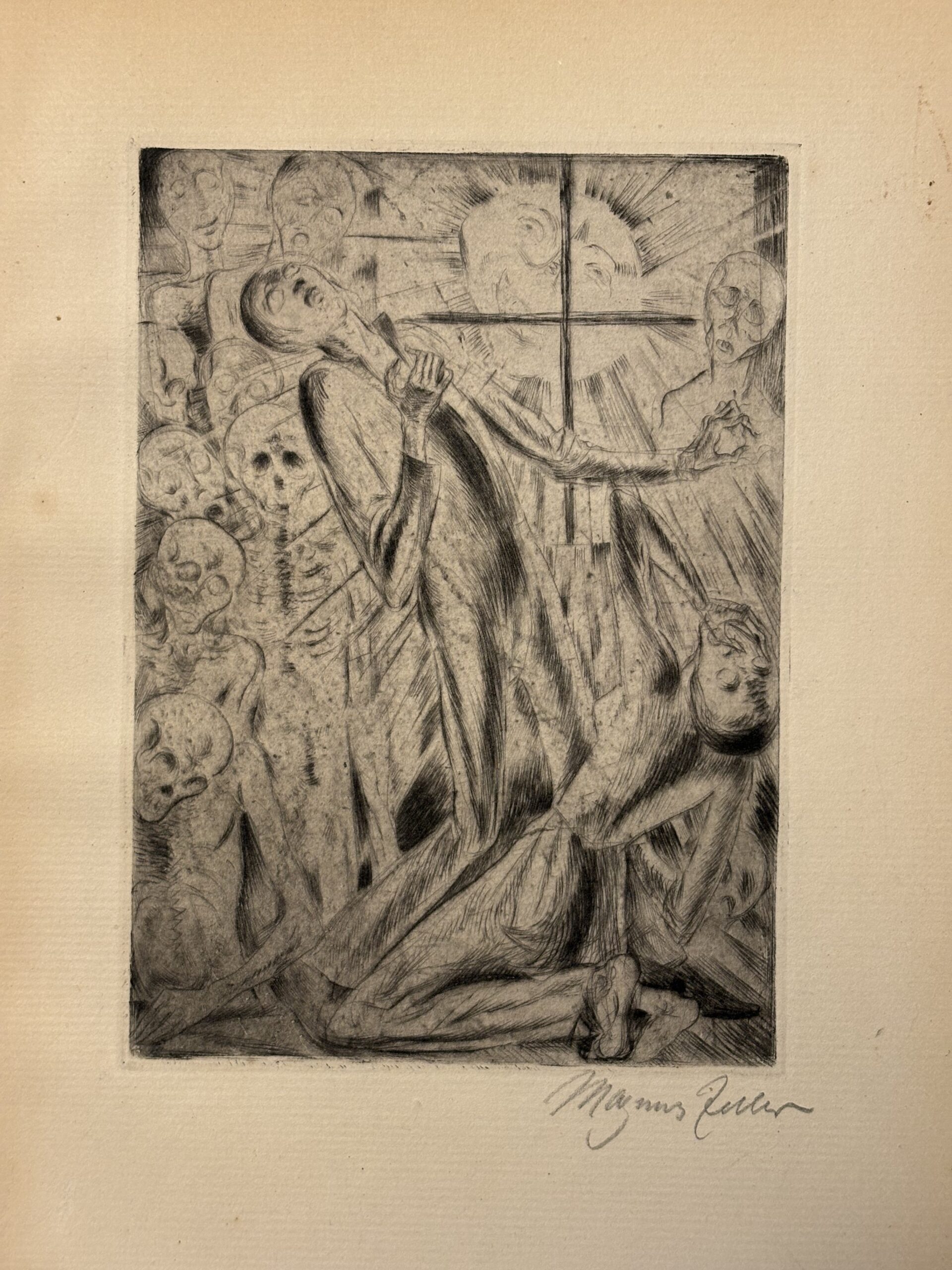

ArtistZeller, Magnus
Artist Years1888-1972
Artist NationalityGerman
Year1922
MediumPrint > Drypoint
DimensionsPlate:: 5.4 X 3.8 inches
Sheets: 9.5 X 5.8 inches
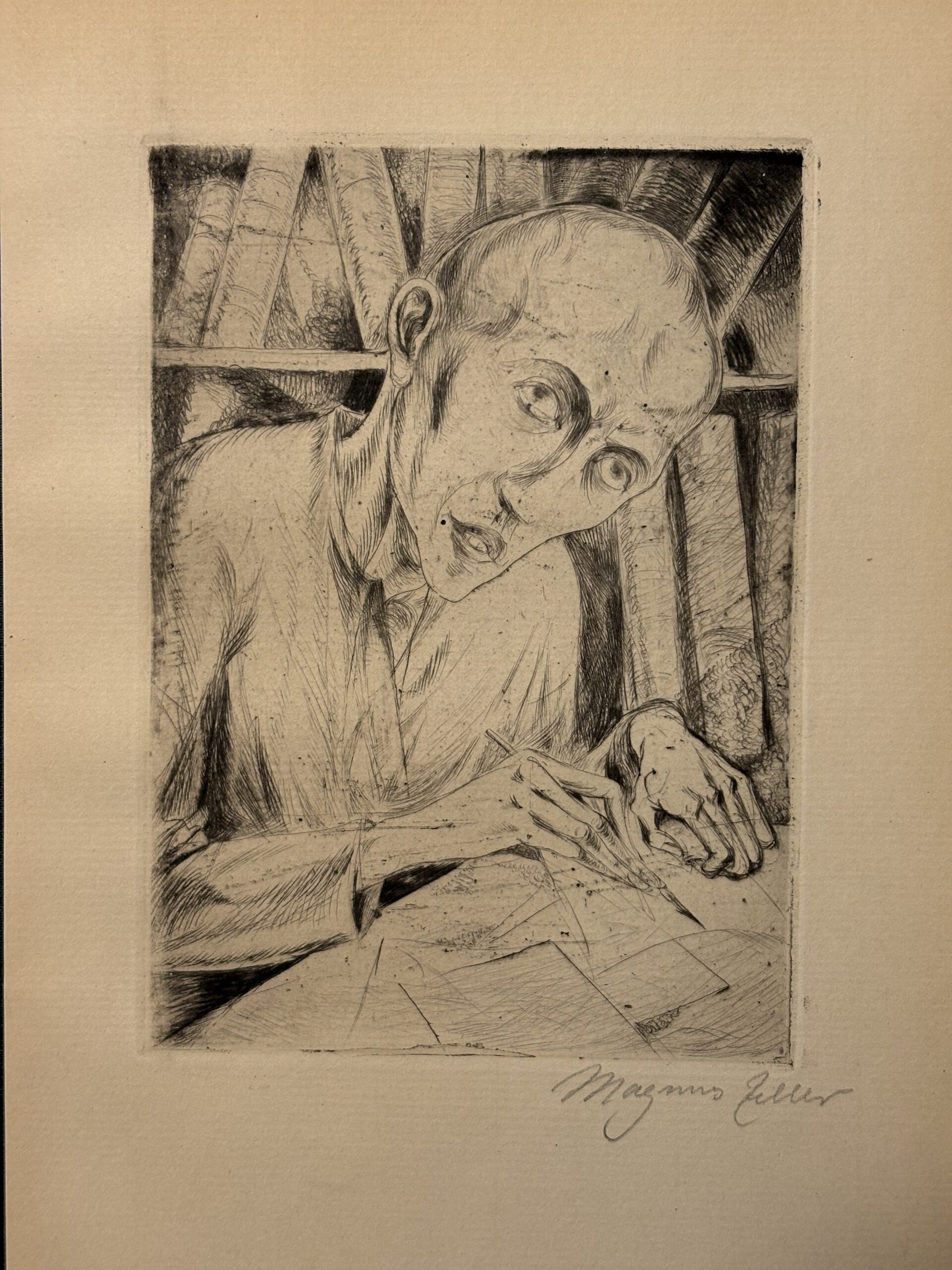
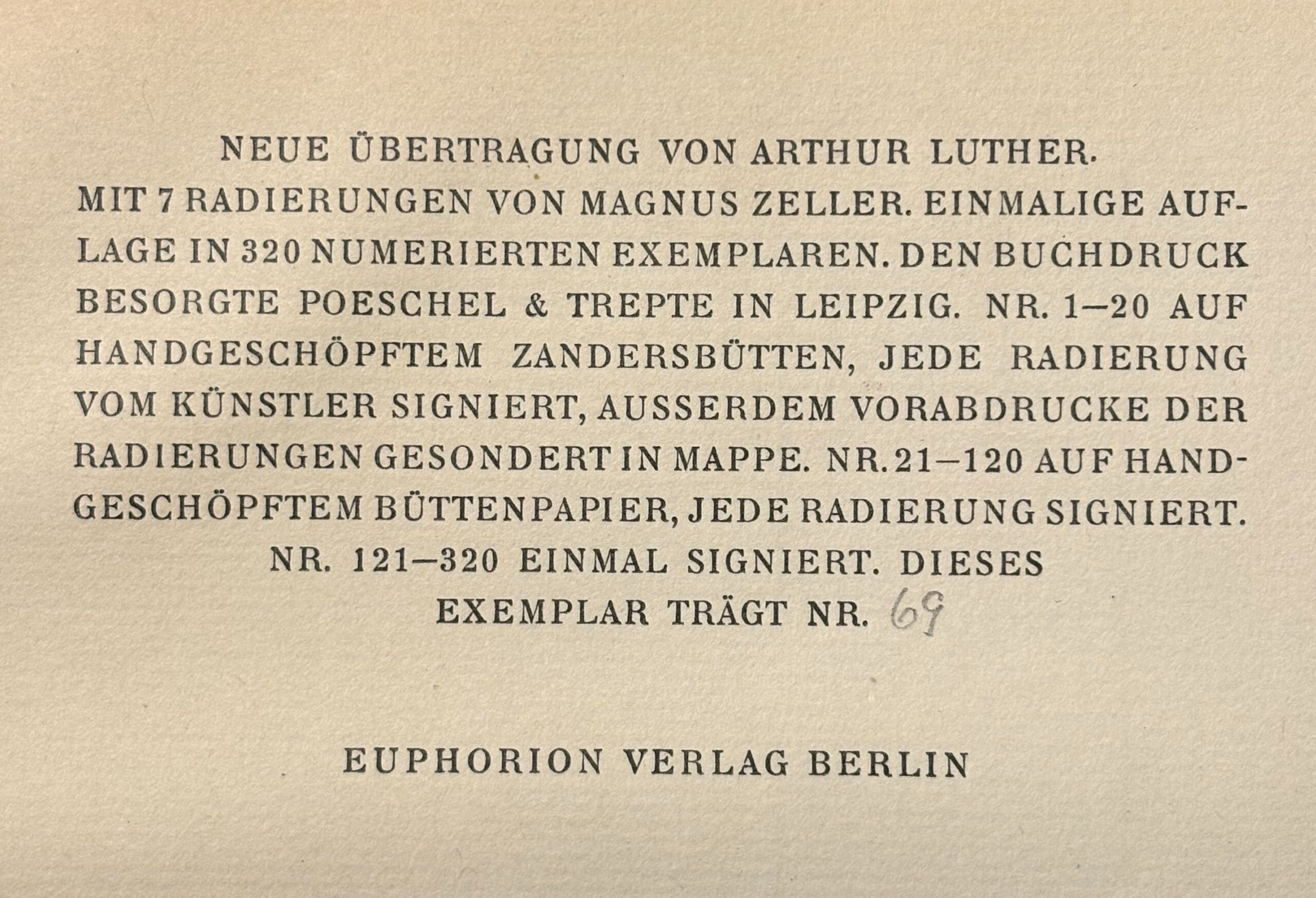
Suite of six (6) Original drypoints, each signed in pencil, printed on felt-finish, cream laid paper. Suite to illustrate Leonid Andrejew Das Rote Lachen (The Red Laugh), published by Erschienen Euphorion Verlag, Berlin, 1922, total edition 120, this No. 69.
Accession Number315908
Notes1.
Magnus Zeller grew up as a child of a Protestant family of parish priests in Biesenrode in the southern Harz. He moved to Magdeburg with his parents in 1901. In Berlin he studied painting and sculpture with Lovis Corinth from 1908 to 1911.
In 1912 he exhibited works in Berlin for the first time. From 1915 to 1918 he was in the military, including in the High Command East. There he learned the madness of war “from the very bottom in the fire zone and at the top of the stage” (Arnold Zweig).
He was a member of the artist association Freie Secession and in the association of fine artists in Berlin from 1913 and already had contacts with Karl Schmidt-Rottluff and a friendship with Arnold Zweig at that time.
In 1918 he was a member of a soldier council of the supreme army leadership and took part in the general assembly of the Berlin workers’ and soldiers’ councils on 10. November 1918 part.
His daughter Susanne was born in October 1918.
In 1920, Zeller published the folders “Ridiculation and Turmoil” together with Arnold Zweig and “Revolutionzeit” about the revolutionary year 1918, which were created in 1917/1918.
In 1921 he published book illustrations for the first time. In 1922 he created seven drypoints to illustrate Leonid Andrejew’s Das Rote Lachen.
From 1923 to 1924 he taught at the State Art School in Tartu (Dorpat), Estonia, where the Estonian-Swedish painter and graphic artist Karin Luts was one of his students. In 1926 he travelled to Paris to study the works of Honoré Daumier and Eugène Delacroix. From 1929, Zeller participated in numerous exhibitions. From 1924 to 1942 regular participation in the Berlin Academy exhibitions. From 1924 to 1937 he lived in Berlin or in Blomberg / Lippe and from 1937 in Caputh.
In the summer of 1935, he spent almost three months in the painting village of Kallmünz. He stayed in Rome from the autumn of 1935 to 1936 in the Villa Massimo, financed by a scholarship. In 1937 he returned to Germany. As part of the nationwide concerted campaign “Degenerate Art”, a total of six works by Zeller from the Berlin city property and the König-Albert-Museum Zwickau were seized and subsequently destroyed. In addition, in his artistic work, he was hindered by the municipal authorities by the fact that he was denied the purchase of painting material.
From 1938, his artistic engagement with the National Socialists took place, and numerous works of painting were created, the discovery of which would have led to life-threatening persecution. However, he was able to remain and exhibit a member of the Reich Chamber of Fine Arts. For this time, his participation in 14 major exhibitions is certainly documented.
After the end of the Second World War, Zeller joined the Social Democratic Party of Germany (SPD), then the Socialist Unity Party of Germany (SED). In 1948, his second wife Helga moved to Hamburg with his son Conrad, he stayed in Caputh with his daughter Helga.
In 1951, Zeller was voted out as the board member of the Association of Visual Artists of the GDR, the background could have been the dispute over the formalism/realism debate.
Zeller was represented in the East Zone or the GDR at most of the important national exhibitions, including 1946 at the Allgemeine Deutsche Kunstausstellung and in 1949 at the 2nd. German Art Exhibition in Dresden. Images of Zeller were also shown at important exhibitions after his death.
His daughter Helga Helm handed over to the archive of the Akademie der Künste Berlin the written estate of her father with sketchbooks, autobiographical records and correspondence with Klaus Richter, Karl Schmidt-Rottluff and Arnold Zweig, among others.
(source: wikipedia.org)
2.
Leonid Andreyev's Das rote Lachen (The Red Laugh) is an expressionistic, fragmented novella depicting the madness and horror of war, likely inspired by the Russo-Japanese War. It follows a soldier's mental breakdown and his brother's attempt to chronicle the senseless carnage, focusing on the psychological destruction rather than a traditional narrative
| Artist | Zeller |
|---|---|
| Nationality | German |
| Category | German Expressionist, European |