

Additional information
| Artist | Klee |
|---|---|
| Nationality | German, Swiss |
| Category | German Expressionist, European |
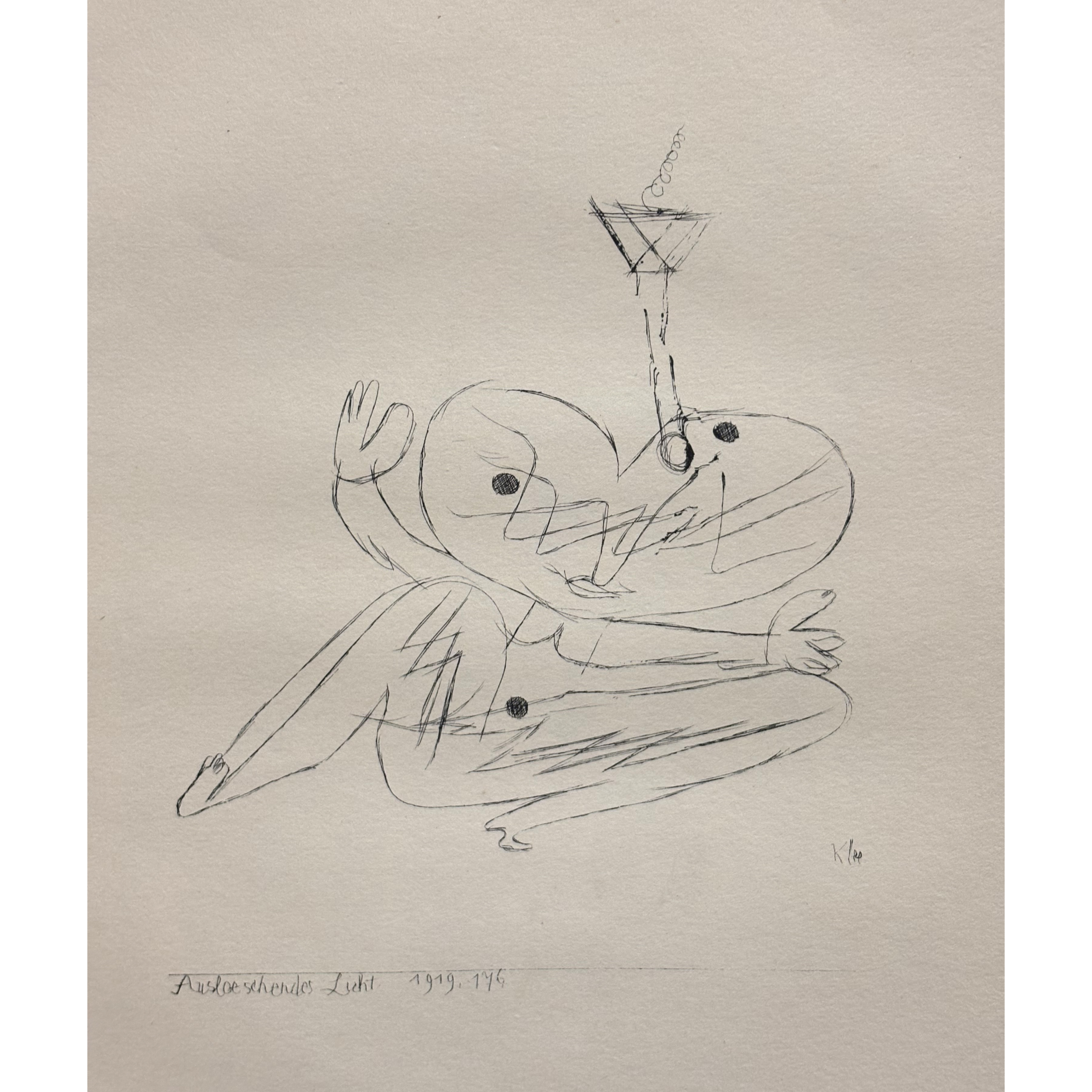
ArtistKlee, Paul
Artist Years1879-1940
Artist NationalityGerman, Swiss
Year1919
MediumPrint > Drypoint
DimensionsPlate: 5.5 X 4.7 inches
Sheet: 10.6 X 8.2 inches
Catalog ReferenceKornfeld 75B; Davis/Rifkind 1492
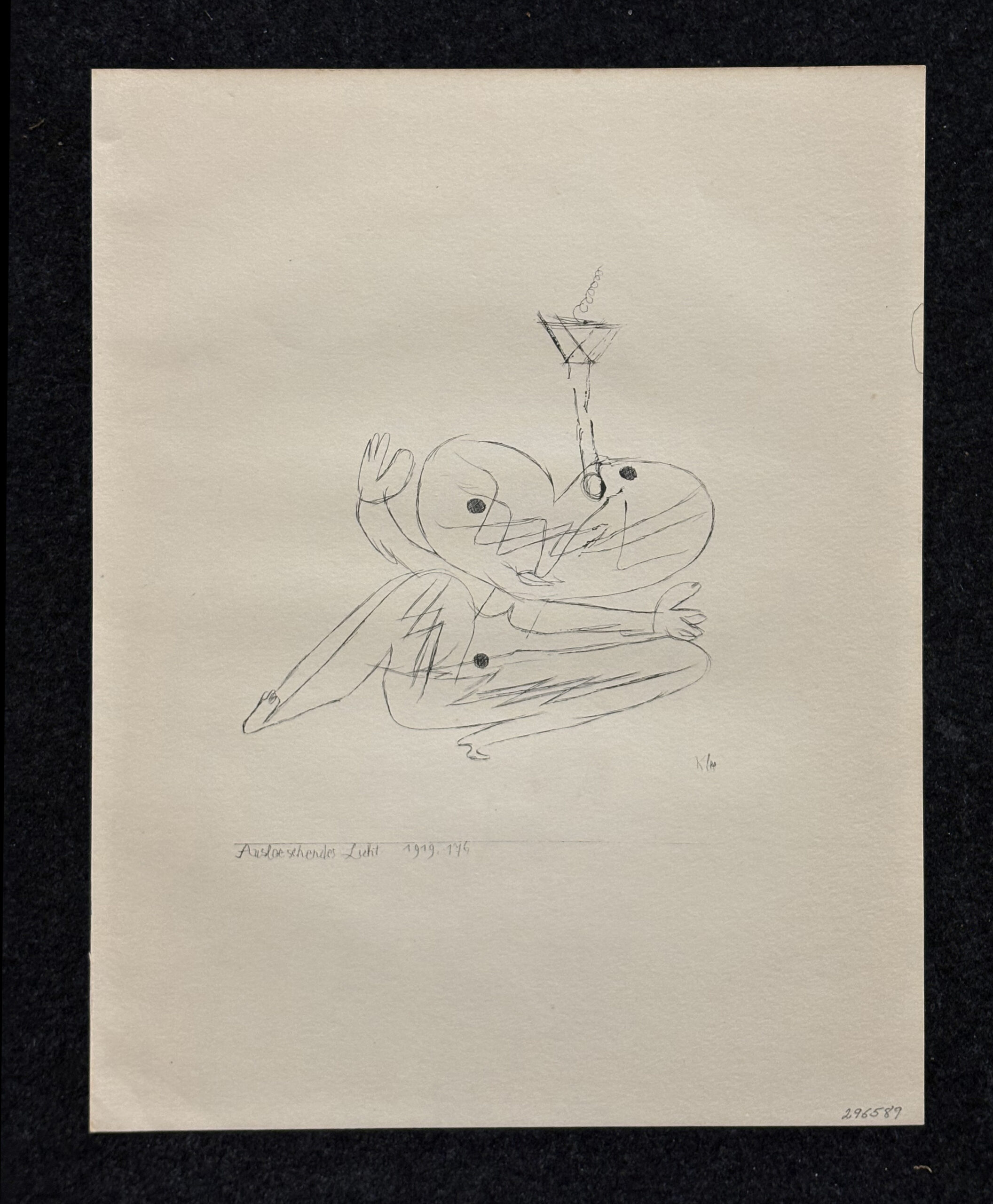
Original drypoint, signed and dated in the plate, printed on soft dark-cream wove paper. Published in Das Kestnerbuch, Paul E. Kuppers ed., Heinrich Bohme Verlag, Hannover, 1919.
Accession Number296589
NotesPaul Klee (December 18, 1879 – June 29, 1940) was a Swiss-born German artist known for his unique style that blended elements of expressionism, cubism, and surrealism.
Paul Klee was born in Münchenbuchsee, near Bern, Switzerland, to a musical family. His father, Hans Wilhelm Klee, was a music teacher, and his mother, Ida Maria Frick, was a trained singer. Klee showed early talent in music and art, initially considering a career as a violinist. He studied at the Academy of Fine Arts in Munich, where he developed his artistic skills and was influenced by various artistic movements.
Klee's career began in earnest after he graduated, and he became associated with the German Expressionist group Der Blaue Reiter. He later taught at the Bauhaus, a significant art school in Germany, where he influenced many students with his innovative ideas about art and color theory. Klee's work is characterized by its whimsical, childlike quality, often incorporating elements of humor and fantasy.
Klee's artistic style is difficult to categorize, as he drew from various influences and movements. He often used vibrant colors and abstract forms, creating works that reflect his philosophical beliefs about art and the nature of reality. His lectures at the Bauhaus emphasized the connections between visual art and music, highlighting the rhythmic qualities of both.
Some of Klee's most famous works include The Twittering Machine, Castle and Sun, and Senecio. These pieces exemplify his ability to blend representational and abstract elements, creating a unique visual language that continues to inspire artists today.
Paul Klee passed away on June 29, 1940, in Muralto, near Locarno, Switzerland. His contributions to modern art have left a lasting impact, and he is remembered as one of the most influential artists of the 20th century. His works are celebrated for their innovative use of color and form, and they continue to be studied and admired in art institutions around the world.
(source: wikipedia.org)
| Artist | Klee |
|---|---|
| Nationality | German, Swiss |
| Category | German Expressionist, European |