

Additional information
| Artist | Bierge |
|---|---|
| Nationality | French |
| Category | European |
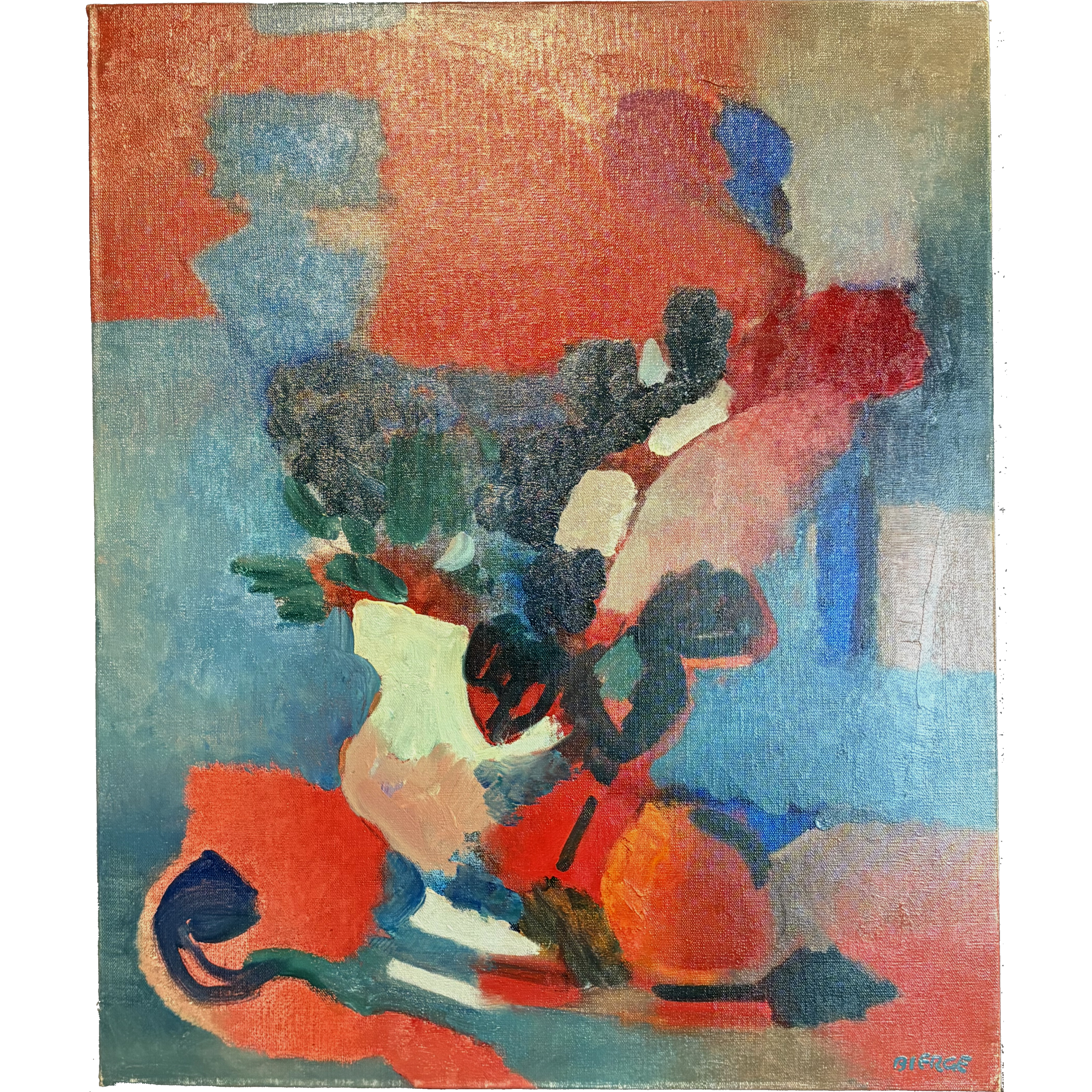
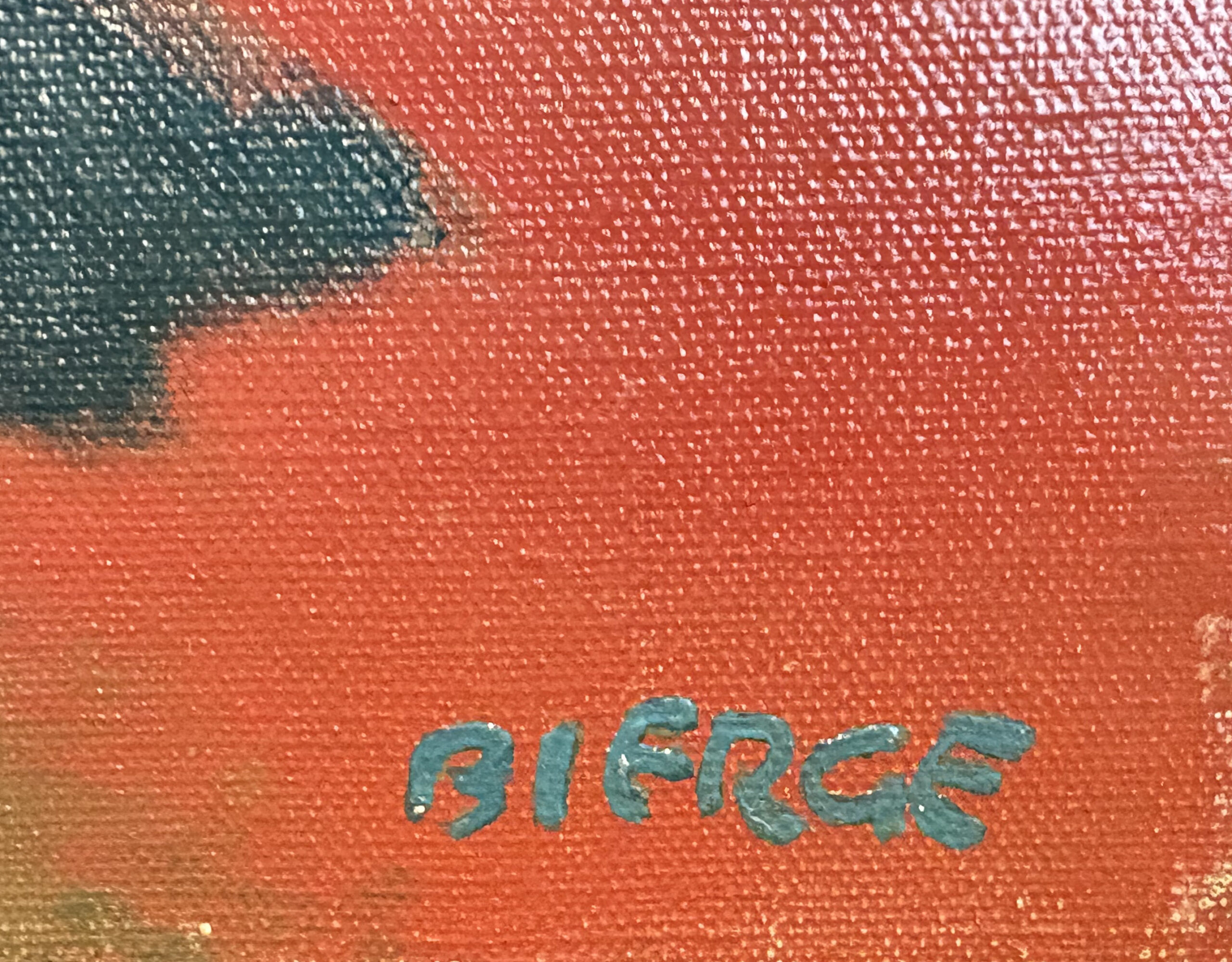
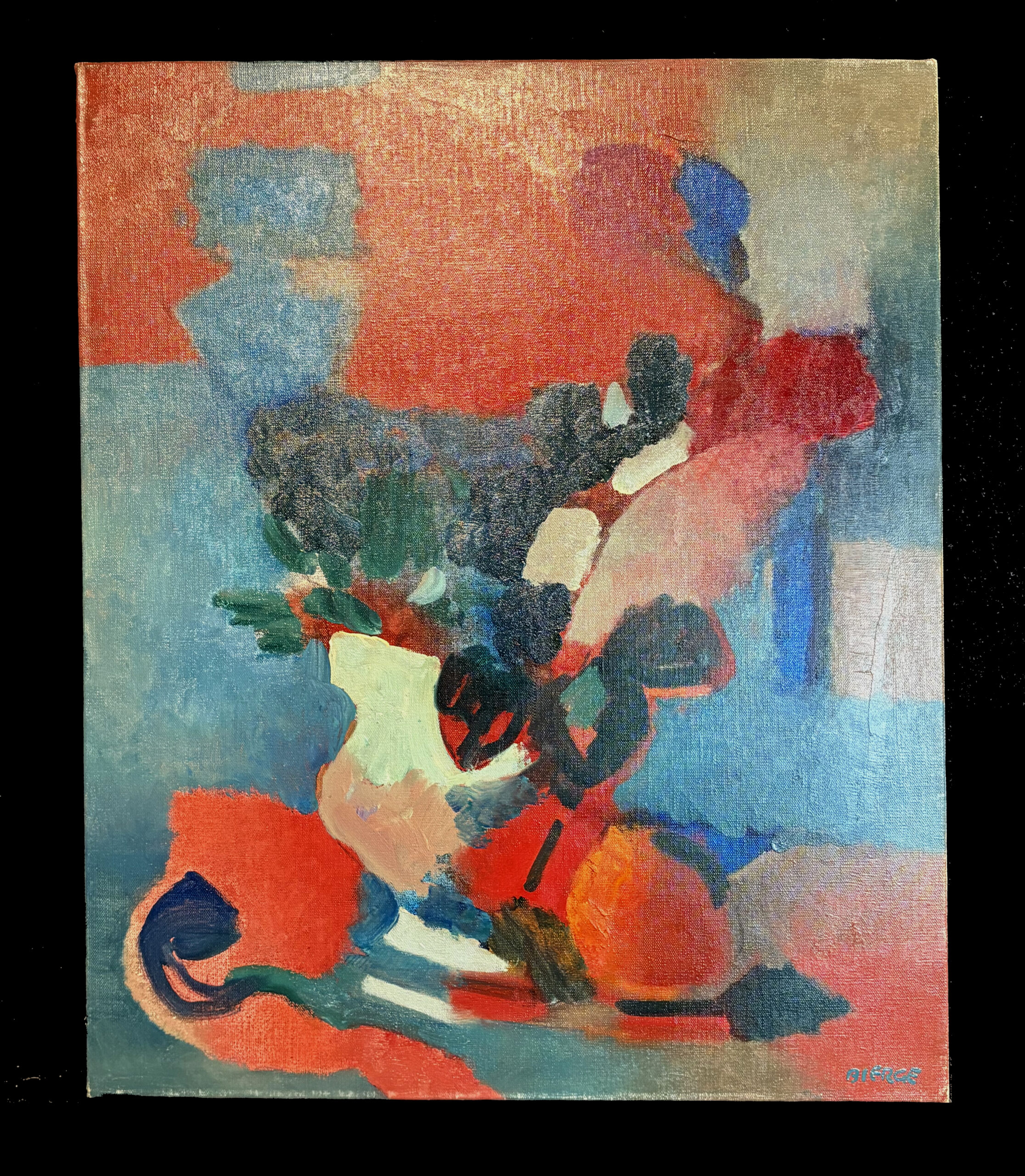
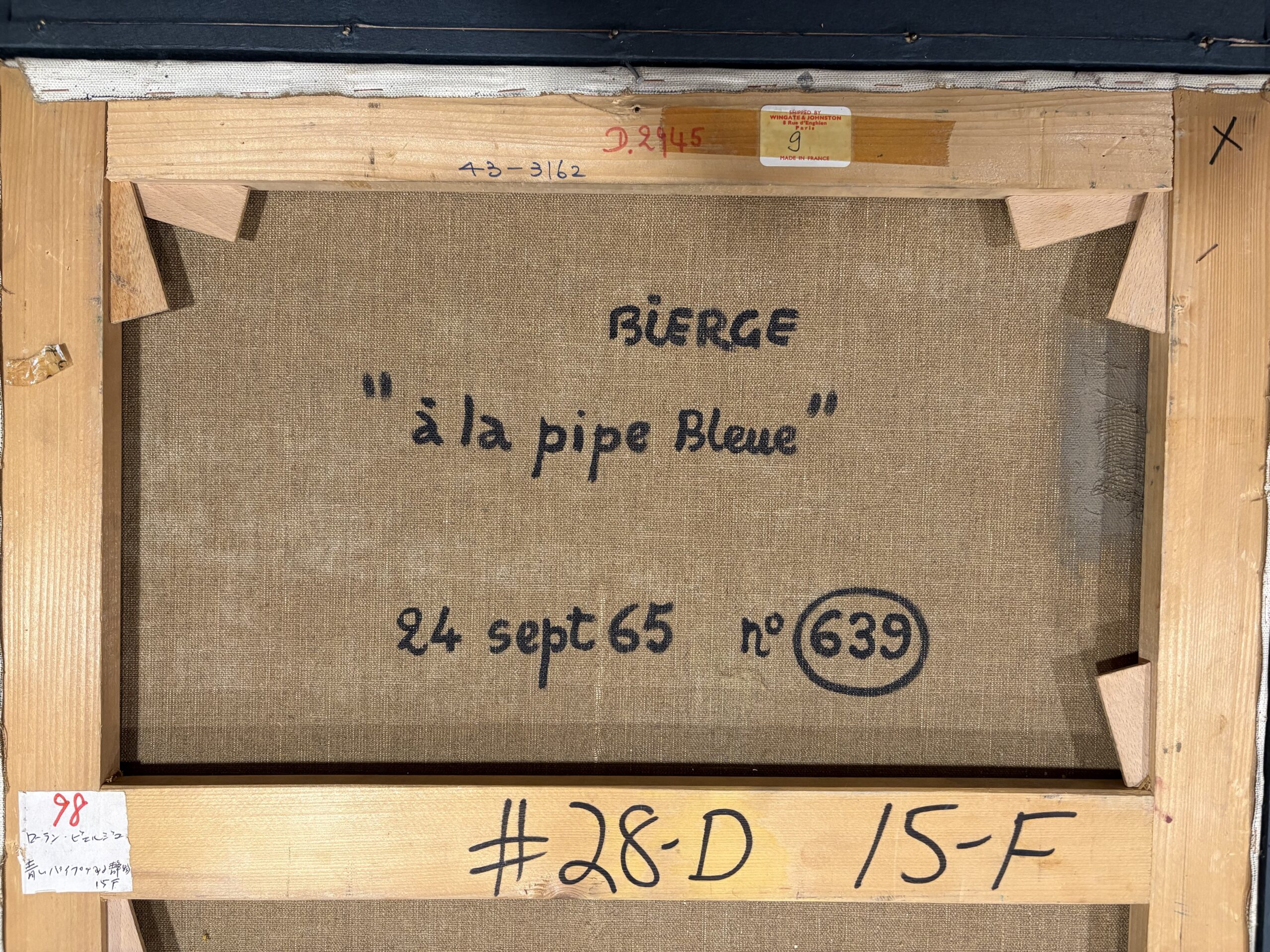
ArtistBierge, Roland
Artist Years1922-1991
Artist NationalityFrench
Year1965
MediumPainting > Oil
DimensionsCanvas: 26 X 22 inches
Oil on canvas, signed lower right, titled and dated on the back.
Accession NumberRC2126
NotesRoland Bierge (26 August 1922 – 26 December 1991) was a French painter and lithographer in Boucau, Pyrénées-Atlantiques, and died 26 December 1991 in Saint-Antoine. He was a member of the New School of Paris.
In his youth, Roland Bierge began working in his father’s painting business, benefiting from the initiation of his grandfather, a church-decorator, a specialist in faux wood, fake marbles and other various pictorial techniques, and attended the evening classes of the Bayonne School of Applied Arts.
He worked alone, influenced and passionate about his readings, and first painted in the manner of Fauvism.
From the end of the Second World War in 1946, he moved to Paris in the Montmartre district, and despite difficult beginnings — because he had to earn a living — he took full advantage of this new "freedom", and visited museums "to quench a real thirst for knowledge."
In 1947, the Vincent van Gogh retrospective of the Musée de l'Orangerie is for him a revelation, "a discovery of painting that provokes a turning point in his work". That same year, he participated in the Salon des indépendants for the first time and in Précy-sur-Oise where he lived, he painted landscapes of Île-de-France, a theme often taken up later. Around the same time he was hired at the decoration workshop of the Comédie-Française as a decorator.
His first private exhibition took place in 1950 at the Galerie La Boëtie and was followed by others in the provinces, Luxembourg, Germany, New York, etc. He also regularly participates in group exhibitions, then in the Salon d'automne (member in 1952), in the Salon de May (from 1969), the Young Painting, the Salon du dessin et de la peinture à l'eau, the Salon Comparisons and with the Group 109.
Landscapes, portraits, nudes and many still lifes, these are his favorite subjects. He also discusses the techniques of pastel, lithography and stained glass for the church of Bouchevilliers.
Jean-Albert Cartier submits that “Gradually, Bierge focuses on the problems of volume construction, using color and light to achieve the balance of forms, light that plays through trees, on water, on the sky, on the reliefs of a nude, as it plays through objects arranged on a table. From these contrasts of shadow and light emerge rhythms, a renewed perspective, the internal life of the painting which no longer owes anything to the anecdote, but to the strictly plastic problems.
The art of Bierge at that time suggests more than he describes, he is at the borders of the stable forms that impose themselves and those that fade into the dream and the imaginary. From this ambiguity are born poetry and serenity. There is a good question for him to be inspired by nature, not to copy it.
The work of André Lhote and his writings caught his attention, then Jacques Villon, another representative artist of post-cubism. But if he is in his time, he will always remain attentive to the lesson of the ancient painters which is for him a source of permanent study. He has never hidden his admiration for Rembrandt and Vermeer in particular, of which he has made interpretations, as well as of Titian, Velázquez, Giorgione and others]. “In these great masters,” he writes, “there is everything, both the detail, the whole, the intelligence and the composition in extraordinary harmonies of color."
Gradually, the work of building his works by large balanced masses being achieved, Bierge moves away from post-cubismism and abandons the deaf and felted colors to approach pure colors. This is the time when he performs the new ceiling of the Opéra Garnier (220 m 22), from February to September 1964, after the model of Marc Chagall, from which he also learned lessons. He then left, after 18 years, his profession as a theatre decorator to devote himself exclusively to his painting.
From 1969, he gradually took liberties in relation to the drawing to cross the transition to a non-figuration in the line of an Estève or a Poliakoff, revealing a palette of bright polychromiepolychromy: "fawn abstractions with pure and sound tones cleverly nested" observes Gérald Schurr.
Critical reception:
Many art critics have been interested in the work of Bierge and have commented on it since its beginnings, notably René Barotte (Plaisir de France), Jean Bouret (Arts), Jean-Albert Cartier (Combat), Jean Chabanon (Le Paintre), Raymond Cogniat (Le Figaro), Guy Dornand (Libération), Jacques Dubois (L'Amateur d'art), Paul Duchein (La DépêcheCarrefourLe Berry républicainLe Monde)
"Although any reference to any model is excluded, the painting of Bierge forces the barriers of indifference. Is it because he became familiar with Chagall's polychromy that the performer of the ceiling of the Opera gradually turned his back to the delicate half-tones of old? Is it a latent, suddenly revealed kinship with Maurice Estève, who provided him with this opulent and joyful palette? The range of blues fills us. Some reds, highlighted by the scholarly opposition of other colors, acquire a stained glass shine. » — Jean-Marie Dunoyer:
"From post-cubism, his painting departs from it by the invention of a personal vocabulary. Its landscapes, nudes, still lifes are based on a solid and massive construction whose lines of force bring each element back to a few essential plans. An atmosphere of life emerges from the whole under the effect of a gradient of values that reinforces a refined light. » — Lydia Harambourg:
« Pure and sound colors, great rhythms strongly opposing the shadow and the light: Bierge practices abstraction with the palette of a wild painter. Starting from Roger de La Fresnaye and a softened cubism, he gradually evolved into a non-figurative art of pure compartmentalized colors and geometric nestings that recall, but from afar, the art of Maurice Estève. » — Gérald Schurr:
Awards:
1955 : Othon-Friesz Prize
1957 : Grand Prix of the City of Marseille
1960 : special prize of the City of Pamplona ; prize of art lovers
1967 : City of Montauban Awards
1969 : Critics' Award, Montauban
1976 : prize of the Merignac Biennale
1978 : Gold medal of the Academia Italia
1979 : Honorary member causa of the European Academy of Fine Arts; gold palette of L'ArtistiqueL'Artistique de L'Isle-Adam
1980 : prize of L'Amateur d'Art, Salon de Montmorency
1986 : Prix des Rencontres d'art en Quercy, Montauban
1987 : Doctor honoris causa in art
1990 : City of Agen prices
| Artist | Bierge |
|---|---|
| Nationality | French |
| Category | European |